05 · Interaction design practiceAcademic
Designing burnout recovery that keeps a therapist in the loop
Clara is a burnout recovery app for university students. A voice-guided AI leads the daily recovery steps, and a therapist joins at set times. It was a course project for the ACM SIGCHI Student Design Competition brief, and was never launched.
Overview
Students burn out and wait too long to ask for help. Clara measures burnout with a short questionnaire, builds a recovery roadmap of small cognitive behavioural therapy tasks, and books therapist sessions whose frequency follows the score. The AI handles the everyday steps and a person handles the rest. We designed and prototyped it in Figma over one semester of Interaction Design Practice in 2022.
The problem
We interviewed four students, three of whom were already getting professional help after burnout. Three things kept coming up: stigma stopped them asking for help, they did not want to burden friends and family, and deadlines pushed out sleep and meals, which made it worse. The apps we found covered general wellbeing, such as meditation, music and community, rather than burnout. And research warned that online therapy without a guide loses more people and can leave someone worse off after a wrong self-diagnosis.
How might an app help a burned-out student start recovering without waiting for a therapist, while keeping a person involved?
The process
We interviewed students, read the research and checked the idea with a clinical psychologist before sketching anything. Two things the psychologist said shaped the product.
From burnout signals to a concept
The team mapped what students described against the research, then listed what a recovery app would need.
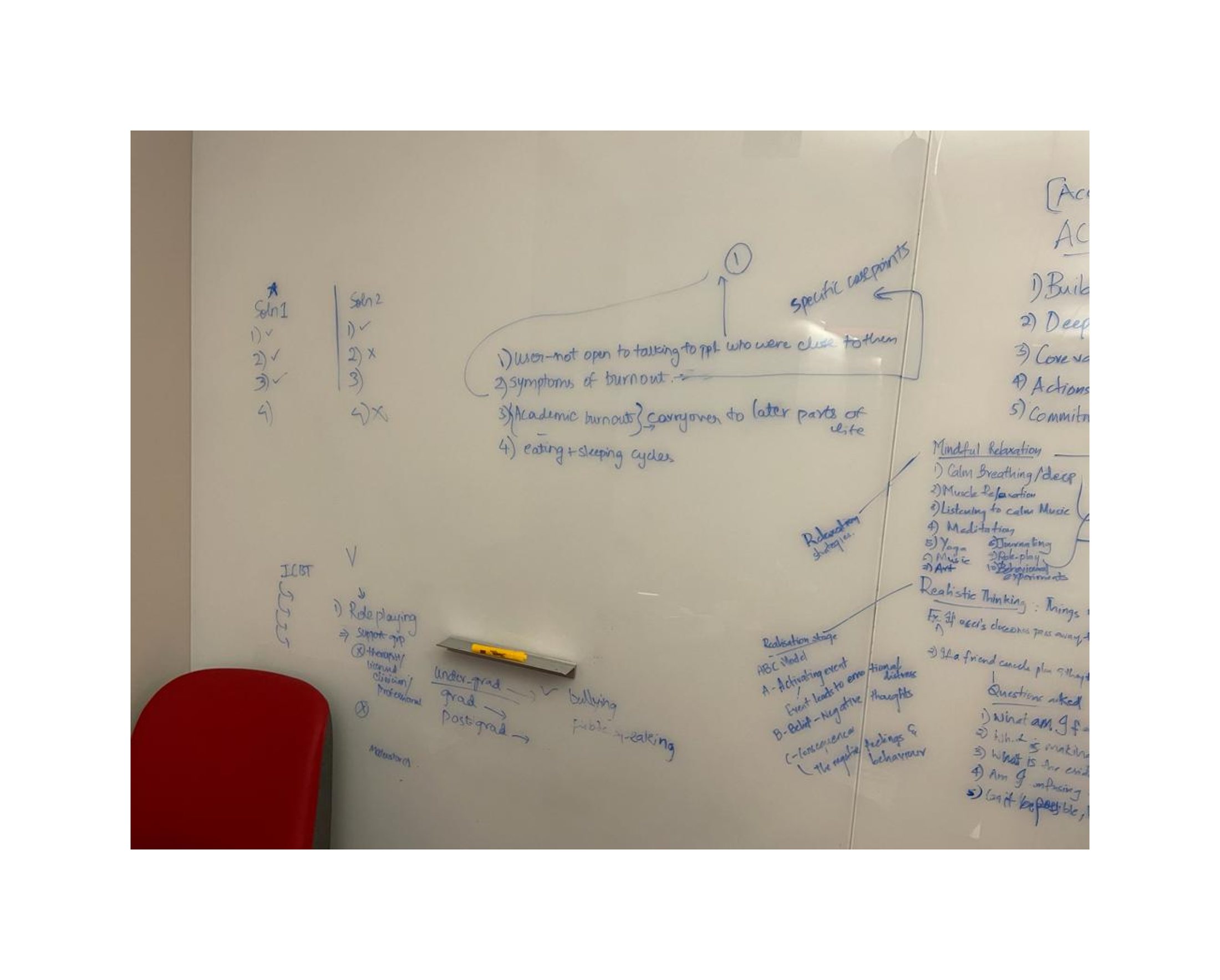
Stigma and not wanting to burden friends kept students from asking for help.
“There needs to be someone who can guide you in your journey.”
Burnout questionnaires are open-source, so a student can take one without a clinician.
We weighed two directions before choosing one.
- 01 / Chosen
AI-guided recovery with a therapist
Daily recovery steps from the AI, therapist sessions at set times, and community and bundles as extras. Students can reach it on their own phone.
- 02 / Set aside
VR role-play with support groups
Immersive practice for situations that cause stress. But it needed headsets most students do not have, was harder to build, and made it harder to involve therapists.
Design decisions
Three decisions shaped how Clara works.
Ask the first questions out loud
- The tension
The therapist needs to know a student’s routine before the first session, and a long form is hard work for someone already worn out.
- The decision
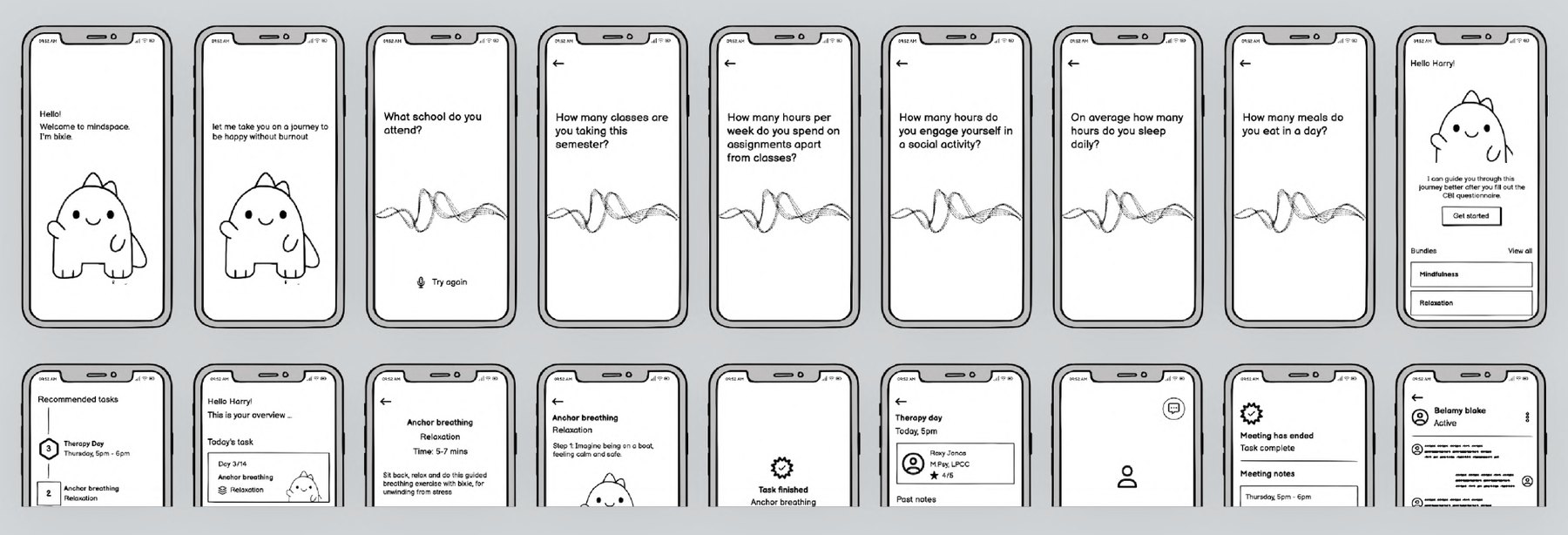
Clara introduces itself and asks the questions by voice: school, workload, sleep, meals. The answers go to the therapist ahead of the first meeting.
- Why it matters
The student starts without typing, and the therapist does not begin from zero. Evaluators asked why we offered both voice and touch, and some worried about speaking answers aloud, so that stayed open.
Let a questionnaire measure burnout, not the AI
- The tension
In our first version the AI picked keywords out of a student’s answers to work out their burnout level. That was hard to compute.
- The decision
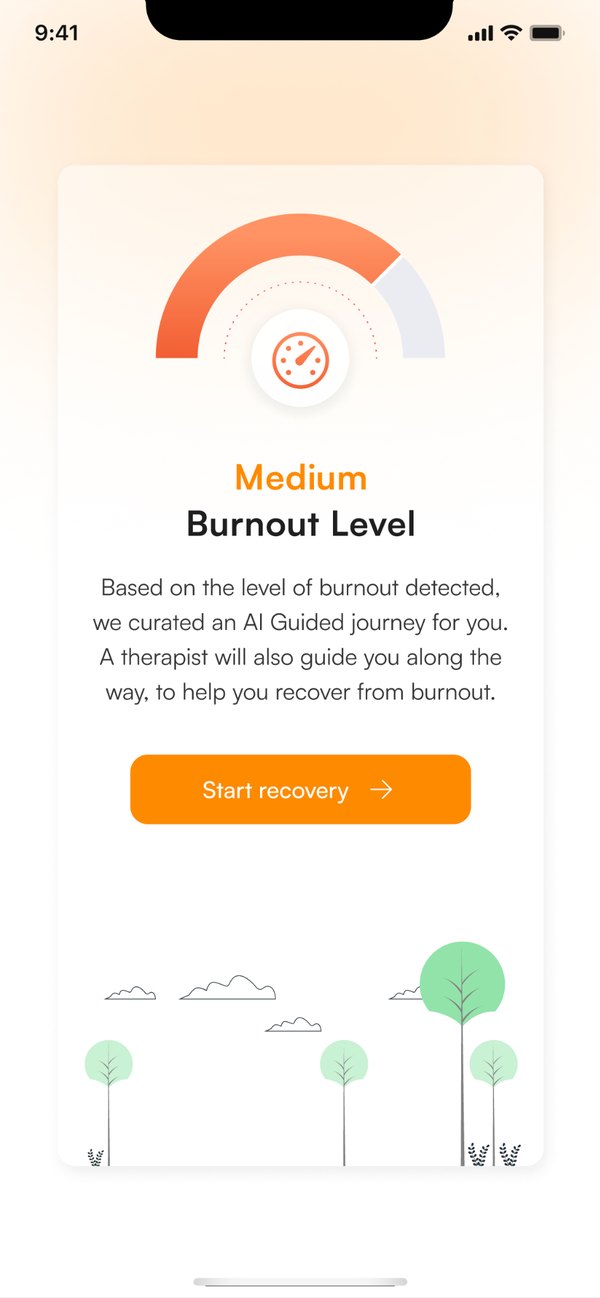
Students answer the Copenhagen Burnout Inventory, a free, validated questionnaire, on a scale from never to always. The result appears straight away as a low, medium or high level.
- Why it matters
The score is dependable, students see where they stand before meeting anyone, and it sets how often a therapist joins. Our experts agreed the questionnaire could be taken online.
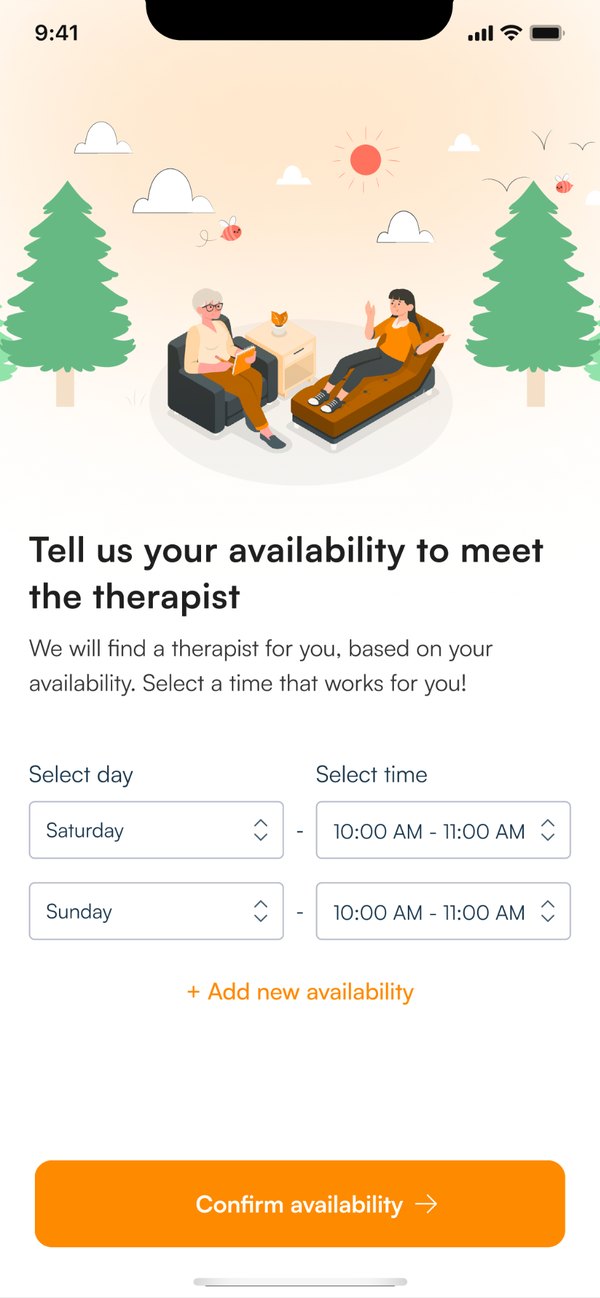
AI for the daily steps, a therapist at set times
- The tension
Online therapy without a guide loses people, and a wrong self-diagnosis can make things worse. But therapists cannot be on call for every student.
- The decision
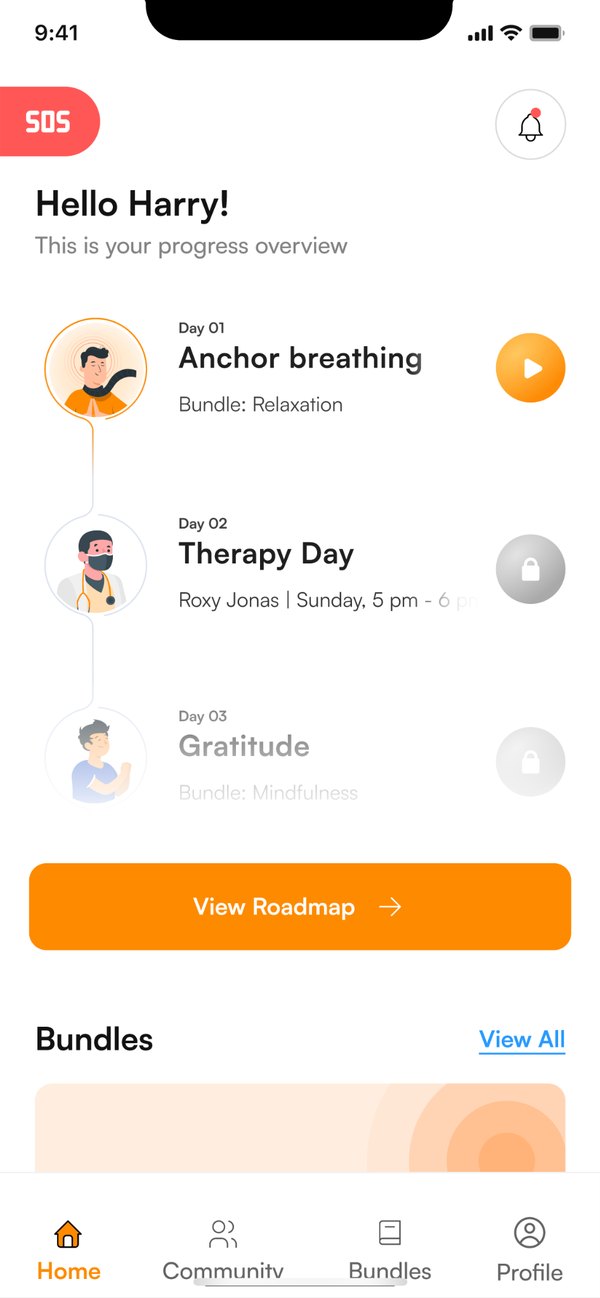
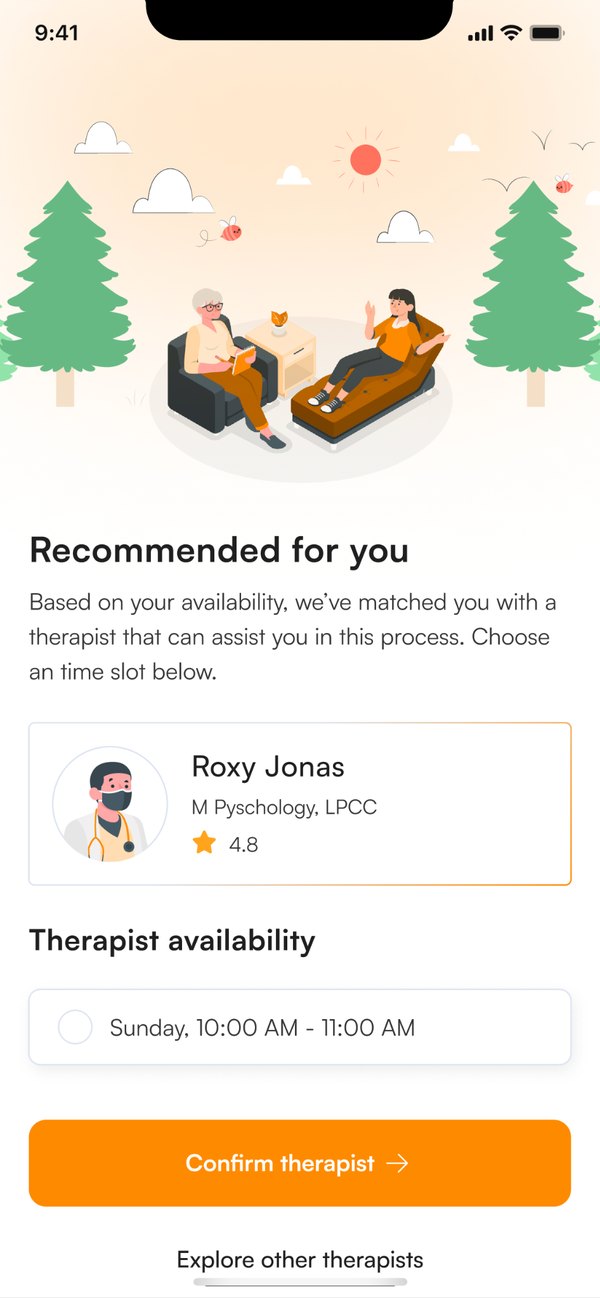
The AI guides the light daily steps, taken from cognitive behavioural therapy. A therapist joins on scheduled days, and the burnout score sets how often. We first planned the first session for day seven, tried day one, and settled on a few days in, because students told us they need time before opening up.
- Why it matters
Everyday support stays light, and a person is always on the schedule.
The outcome
This was a course concept, so there are no launch metrics. We tested the prototype with four students who had used similar apps or been in therapy for burnout, and with four experts: a clinical psychologist and three HCI master’s students. Each person did four tasks.
- Hardest task
3 of 4
Experts could not find their latest session notes
- Easiest tasks
4 of 4
Experts finished the daily breathing task and reached emergency help
- SUS, four experts
91.9
Average usability score. A small sample, but all would use it often
Students and experts pointed at the same gaps. The only way to session notes was the therapy-day step in the roadmap, and the notes did not say who wrote them. Students could not see why a therapist was recommended or how often they would meet. The community had no way to post. And the SOS button only showed a hotline number, when people expected Clara to alert their therapist or ask a few questions first.
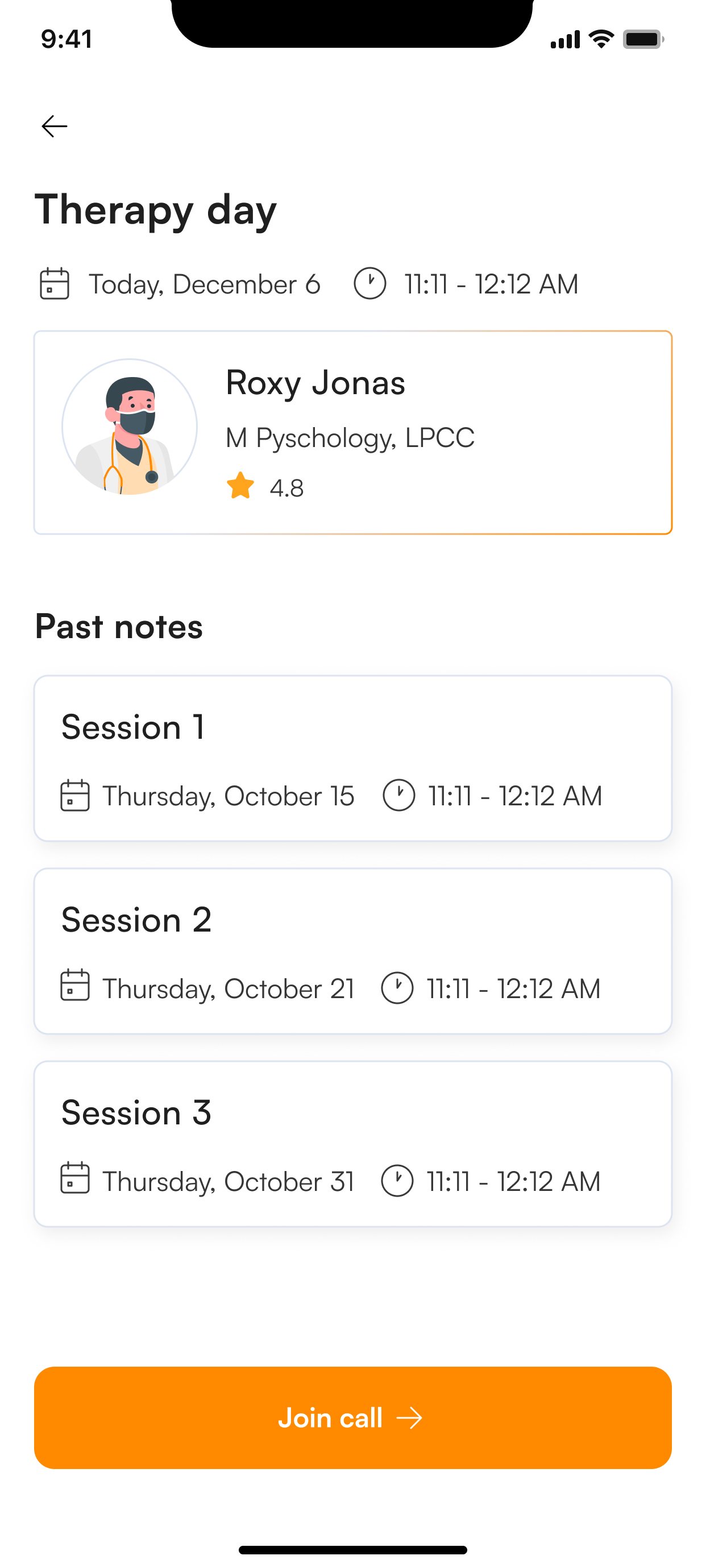
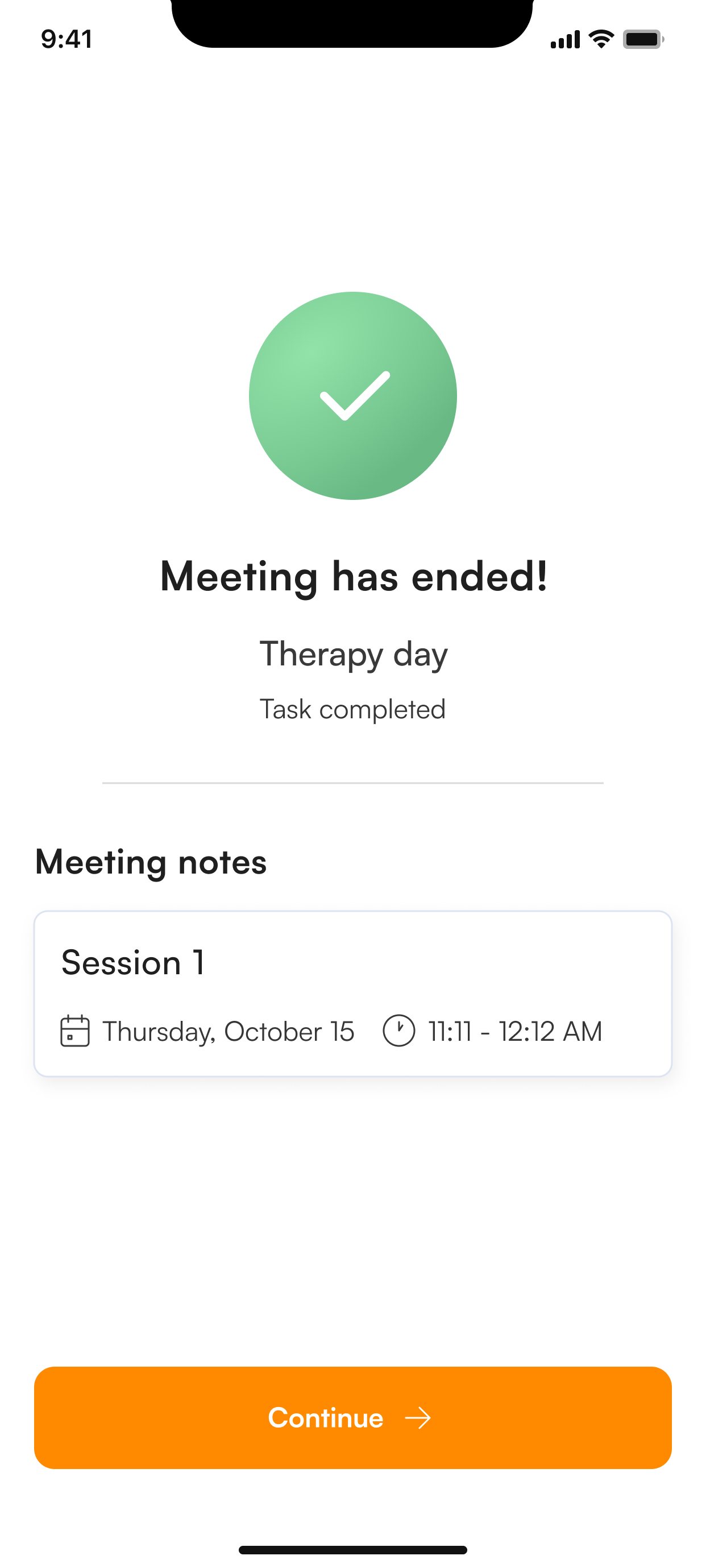
We wrote up fixes: show why a therapist was matched and how often they meet, add a second way into session notes, let students post and filter in the community, ask for feedback on each task, and make SOS reach a person. These remain recommendations. We have not retested them.
How students choose a therapist and what makes one feel right. How therapists shape recovery tasks to keep people coming back. And what happens when a therapist finds something beyond burnout.
Reflection
The AI was easy to use. Finding the people was not.
Every expert finished the daily task and reached emergency help, but three of four could not find their session notes, and students could not tell why a therapist was recommended. In a product that pairs software with a person, the route to the person needs as much design as the software.